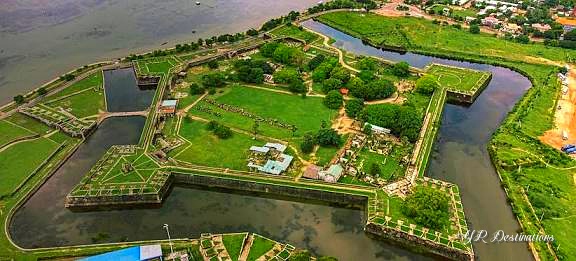
Forte de Jaffna

Forte de Jaffna

0.0 · 0 reviews 162 views Last updated Nov 19, 2026
Jaffna, Jaffna
0.0Rating
May to SeptemberBest Time
FreeEntry Fee
Half DaySuggested Time
EasyDifficulty
5 minRead Time

Where to stay near Forte de Jaffna

Compare live prices with our booking partners.

Some links below are affiliate links. If you book through them we may earn a small commission — at no extra cost to you. How this works.

Cost & practical info

Entry fee Free Confirm current fees on site
Best time to visit May to September
Suggested time Half Day
Difficulty Easy

Prices and opening hours can change — always confirm with the official site before you travel.

The Guide

🏰 Unveiling the Grandeur of Jaffna Fort

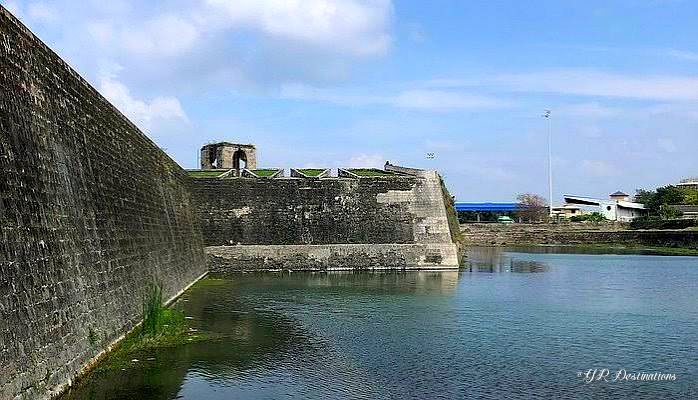
Step back in time and immerse yourself in centuries of history at the magnificent Jaffna Fort, a formidable stronghold nestled on the southern edge of the Jaffna Peninsula in Sri Lanka. This iconic landmark, a silent witness to a turbulent past and a testament to enduring resilience, stands proudly overlooking the serene Jaffna Lagoon. Its ancient walls whisper tales of colonial powers, fierce battles, and the vibrant cultural tapestry of the northern region. Originally built by the Portuguese in 1618, it was later expanded and fortified by the Dutch, who transformed it into one of the most significant forts in Asia. The British then took control, further solidifying its strategic importance. Today, the fort, though bearing the scars of recent conflicts, is undergoing a remarkable restoration, inviting visitors to explore its vast grounds and connect with its rich heritage. 📸

The sheer scale of Jaffna Fort is awe-inspiring. Its pentagonal shape, characteristic of 17th-century European military architecture, is surrounded by a moat and robust ramparts. As you wander through the sprawling complex, you'll encounter remnants of various structures that once thrived within its walls. Imagine the bustling life that once filled these spaces – administrative buildings, churches, residential quarters, and military barracks. The fort served not only as a military bastion but also as a vital administrative and commercial hub for the colonial powers, controlling trade routes and asserting their dominance over the region. 🗺️

⚔️ A Glimpse into its Storied Past

The history of Jaffna Fort is a fascinating chronicle of power struggles and cultural exchange. The Portuguese, upon their arrival in Jaffna, recognized the strategic importance of the location and quickly erected their initial fortifications. Their primary goal was to control the lucrative pearl fisheries and cinnamon trade, and the fort became instrumental in asserting their authority. However, their reign was short-lived, as the Dutch East India Company (VOC) soon set their sights on the region. After a series of fierce battles, the Dutch successfully captured the fort in 1658 and embarked on an ambitious project to rebuild and expand it into the formidable structure we see today. They introduced superior engineering and defensive strategies, making it virtually impregnable for its time. 🛡️

Under Dutch rule, Jaffna Fort flourished. It became the administrative capital of their northern territories, with a thriving community within its walls. The Dutch left an indelible mark on the fort's architecture, evident in the remaining structures and the overall layout. The British took control in 1795, marking the end of Dutch colonial rule in Sri Lanka. While they maintained the fort's strategic importance, its military significance gradually waned with advancements in warfare. However, it continued to serve as an administrative center and a symbol of colonial power. The 20th century brought new challenges, with the fort becoming a focal point during the Sri Lankan civil war. It endured heavy shelling and intense sieges, leaving much of it in ruins. 😢

🏗️ Restoration and Renewal

In recent years, Jaffna Fort has embarked on a journey of remarkable restoration, thanks to international aid and local efforts. The archaeological department, in collaboration with various organizations, is meticulously working to reconstruct and preserve this historical treasure. Visitors can now witness the ongoing efforts to rebuild damaged ramparts, restore ancient buildings, and unearth hidden secrets. This restoration not only aims to bring the fort back to its former glory but also to ensure that future generations can appreciate its significance. Walking along the reconstructed walls, you get a palpable sense of the fort's enduring spirit and the dedication to preserving its legacy. 🌿

Exploring the fort offers a unique opportunity to connect with different layers of history. You can still discern the distinct architectural styles of the Portuguese, Dutch, and even British periods. Imagine the soldiers standing guard on the ramparts, the merchants trading their wares, and the colonial administrators making crucial decisions within these very walls. The vast open spaces within the fort are perfect for a leisurely stroll, offering panoramic views of the Jaffna Lagoon and the surrounding landscape. It's a photographer's paradise, especially during sunrise or sunset, when the ancient stones are bathed in a golden glow. 🌅

🚶‍♀️ Exploring the Fort Complex

Upon entering the fort, you'll find several points of interest. The Queen's House, though largely in ruins, hints at the grandeur it once possessed. The Dutch Reformed Church, a poignant reminder of the fort's religious history, is also undergoing restoration. The various bastions, each with its own name and story, provide excellent vantage points. Don't miss the opportunity to walk along the ramparts, offering breathtaking views of the lagoon and the vibrant city of Jaffna beyond. The sheer size of the fort means you can easily spend a couple of hours exploring its various sections, imagining the lives that once unfolded within its walls. 🚶‍♂️

Beyond its historical significance, Jaffna Fort is also a place of contemplation and reflection. It stands as a powerful symbol of resilience, having withstood centuries of conflict and change. Its ongoing restoration represents hope and a commitment to preserving the cultural heritage of Sri Lanka. A visit to Jaffna Fort is not just a historical tour; it's an immersive experience that transports you through time, offering insights into the complex tapestry of Sri Lankan history and the enduring spirit of its people. Be sure to allocate ample time to truly soak in the atmosphere and appreciate the intricate details of this magnificent historical monument. It's a must-visit for anyone traveling to the northern province. ✨

Travel Context

Practical, Sri Lanka-specific detail for Forte de Jaffna — where it sits, how far it really is, what it costs and how to behave so your visit is welcome.

Where you are

This destination sits in Jaffna, Jaffna — Jaffna District, Sri Lanka. Distances look short on a map but Sri Lankan roads are slow, so plan fewer stops per day than you would at home.

Distance from Colombo

Roughly 410 km by road from Colombo, which is about 10.8 hours depending on traffic, the route and the time of day. The straight-line distance is shorter — allow extra time for hill-country bends, wildlife crossings and roadside stops.

Climate & season

May to September The south and west coasts are driest from December to March; the east coast from April to September. Conditions change quickly in the hill country, where mist and afternoon rain are routine.

What it costs

Entry is listed as Free. Budget separately for transport, food and any guide. Foreign-visitor tickets at major sites are priced in USD, and card machines are unreliable outside the main towns — carry rupees in small notes.

Etiquette & safety

Keep a respectful distance, stay quiet, and never ask a driver to chase an animal or leave the track. Dawn and late afternoon are the most productive hours, and muted colours help you blend in.

Best Time to Visit

Jan
Feb
Mar
Apr
May
Jun
Jul
Aug
Sep
Oct
Nov
Dec

Local Weather

Jaffna Broken clouds
28°
Feels like 31°C
72% 2.87 km/h
Broken clouds
Keep Exploring

Related Travel Guides

Location & Map

Jaffna, Jaffna
Get Directions

Fuel Cost Calculator

How to Get There

🚗 Getting to Jaffna Fort

Jaffna Fort is conveniently located within Jaffna city, making it easily accessible. Here's how you can reach this historical landmark:

  • 🚆 By Train: The most scenic and popular way to reach Jaffna is by train. The 'Yal Devi' train service connects Colombo Fort to Jaffna. Once you arrive at Jaffna Railway Station, the fort is just a short 10-15 minute tuk-tuk ride away (approximately 2-3 km).
  • 🚌 By Bus: Regular bus services operate from major cities like Colombo, Kandy, and Trincomalee to Jaffna. The Jaffna Bus Stand is located centrally, and from there, you can easily take a tuk-tuk or even walk to the fort (around 1.5-2 km depending on the stand).
  • 🚘 By Car/Taxi: If you prefer a more private and direct journey, you can hire a private car or taxi from anywhere in Sri Lanka to Jaffna. The roads to Jaffna are generally in good condition. Once in Jaffna, navigating to the fort is straightforward using GPS. There's usually parking available near the fort entrance.
  • tuk-tuk/Bicycle within Jaffna: Within Jaffna city, the fort is easily reachable by tuk-tuk, which are readily available. Many guesthouses and hotels also offer bicycle rentals, providing a pleasant way to explore the city and reach the fort at your own pace. 🚴‍♀️

Safety & Travel Tips

⏰ Best Time to Visit: Visit early morning (around 8-10 AM) or late afternoon (3-5 PM) to avoid the midday heat and enjoy the best light for photography. ☀️
🚶‍♀️ Wear Comfortable Shoes: You'll be doing a lot of walking on uneven surfaces, so comfortable footwear is essential.
💧 Stay Hydrated: Jaffna can get quite hot, especially during the dry season. Carry a water bottle to stay hydrated.
🧢 Sun Protection: Bring a hat, sunglasses, and apply sunscreen to protect yourself from the sun.
📸 Photography: Photography is generally allowed, but always be respectful of any signs or ongoing restoration work. The fort offers fantastic photo opportunities, especially at sunrise or sunset. 🌄
Respect the Site: Jaffna Fort is a historical and culturally significant site. Please refrain from littering, climbing on fragile structures, or defacing any part of the fort.
Guided Tours: Consider hiring a local guide at the entrance to get a deeper understanding of the fort's history and significance. 🗣️
Combine with Other Attractions: Jaffna Fort is close to other attractions like the Nallur Kandaswamy Kovil and Jaffna Public Library, making it easy to plan a day of sightseeing.
Local Etiquette: While not strictly required within the fort, it's always good practice to dress modestly when visiting historical or religious sites in Sri Lanka. 🙏

Nearby Amenities

🍽️ Restaurants & Cafes: There are numerous restaurants and local eateries within a short distance of Jaffna Fort, offering delicious Jaffna cuisine, including vegetarian and non-vegetarian options. Look for places along Hospital Road or within the main city area. 🍛
🏨 Accommodation: A wide range of hotels, guesthouses, and homestays are available in Jaffna city, catering to various budgets. Many are conveniently located within a 1-3 km radius of the fort. 🛌
🏧 ATMs & Banks: Several banks with ATM facilities can be found in Jaffna city center, just a short tuk-tuk ride from the fort. 💰
🏥 Hospitals & Pharmacies: The Jaffna Teaching Hospital, a major public hospital, is located within the city. Private clinics and pharmacies are also readily available for any medical needs. 💊
🛒 Convenience Stores: Small shops and convenience stores selling snacks, drinks, and daily necessities are scattered throughout the city. 🛍️
⛽ Fuel Stations: Fuel stations are available on the main roads within Jaffna city. ⛽

Sri Lanka Essentials

The things that catch visitors out on a first trip — money, connectivity, transport, health and the small etiquette rules that make a real difference.

Money & payments

The currency is the Sri Lankan rupee (LKR). Cards work in hotels, supermarkets and larger restaurants, but tuk-tuks, small entry gates, beach cafés and village shops are cash-only. Draw from bank ATMs in towns rather than standalone machines, keep small notes for change, and carry enough cash for two days when you head into the hill country or the north.

Connectivity & data

A local tourist SIM (Dialog, Mobitel or Hutch) is cheap and easy to buy at the airport or in any town with your passport. Coverage is good on the coasts and in towns, patchier in the Knuckles, parts of the north and inside national parks. Download offline maps and screenshots of bookings before remote drives.

Getting around

Trains are slow, scenic and very cheap — the hill-country line is the highlight. Buses cover almost everywhere but can be crowded. Tuk-tuks suit short hops; agree the fare first or use a metered app. Private drivers are good value for multi-stop days. Distances take longer than the map suggests: 100 km can easily be three hours.

Health & safety

Dengue is present, so use repellent and cover up at dusk. Drink bottled or filtered water, and be careful with ice in remote places. The sun is strong even when overcast. Pharmacies are common in towns; serious care is concentrated in Colombo. Travel insurance that covers adventure activities is worth having.

Responsible travel

Sri Lanka is small and heavily visited — small choices add up. Refuse plastic bags and single-use bottles where you can, avoid elephant rides and any attraction that chains wildlife, dress modestly at religious sites, and buy directly from local guides, homestays and cafés rather than international middlemen.

Holidays & opening hours

Poya (full moon) days are public holidays: temples are busy, some shops close and the sale of alcohol is restricted. Many archaeological sites open at 7am and close by 5–6pm, and last entry is usually an hour earlier. Check opening days before building a long drive around one site.

Traveler Reviews (1)

Yohan Rasindu
Yohan Rasindu Jul 22, 2026

woow..

✍️ Leave a Review

Frequently Asked

Jaffna Fort is generally open to visitors from morning till late afternoon, typically from 8:00 AM to 6:00 PM. However, it's always advisable to check locally upon arrival or with your accommodation for any specific seasonal changes or public holiday hours.
Yes, there is a nominal entrance fee for foreign visitors to Jaffna Fort. This fee contributes towards the ongoing maintenance and restoration efforts of this historical site.
To thoroughly explore Jaffna Fort and appreciate its historical significance, it is recommended to allocate at least 1.5 to 2 hours. If you wish to take many photographs or hire a guide, you might want to spend a bit longer.
You can certainly explore Jaffna Fort on your own. However, hiring a local guide can significantly enhance your visit by providing detailed historical context, insights into the fort's architecture, and stories that bring the ruins to life.
Basic restroom facilities may be available near the entrance or within the fort complex, but they might be limited. It's advisable to use facilities before arriving or at nearby establishments.
Weekly Dispatch

Get Travel Inspiration

Hidden gems, local tips & exclusive guides from Sri Lanka, Asia and beyond — delivered to your inbox, weekly.

No spam, ever. Unsubscribe anytime.