Sri Pada / Pico de Adão

Sri Pada / Pico de Adão

0.0 · 0 reviews 198 views Last updated Nov 19, 2026
Distrito de Ratnapura, província de Sabaragamuwa
0.0Rating
December – AprilBest Time
FreeEntry Fee
Full DaySuggested Time
HardDifficulty
3 minRead Time

Where to stay near Sri Pada / Pico de Adão

Compare live prices with our booking partners.

Some links below are affiliate links. If you book through them we may earn a small commission — at no extra cost to you. How this works.

Cost & practical info

Entry fee Free Confirm current fees on site
Best time to visit December – April
Suggested time Full Day
Difficulty Hard

Prices and opening hours can change — always confirm with the official site before you travel.

The Guide

Sacred Mountain of Sri Lanka 🏔️

Sri Pada, internationally known as Adam's Peak, is one of the most sacred and iconic mountains in Sri Lanka. Rising to a height of 2,243 meters (7,359 feet) above sea level, the mountain is located within the beautiful Central Highlands of Sri Lanka, surrounded by dense forests, rivers, and misty mountain landscapes.


The name “Sri Pada” means “Sacred Footprint” in Sinhala. At the summit of the mountain lies a large footprint-shaped indentation in the rock that is deeply respected by multiple religions. For Buddhists, the footprint is believed to be the mark left by Gautama Buddha during his visit to the island. Hindus believe it belongs to Lord Shiva, while Christians and Muslims associate it with Adam, the first human according to Abrahamic traditions. Because of these beliefs, the mountain has become a unique symbol of religious harmony, attracting pilgrims and travelers from many different cultures and faiths.


The Pilgrimage Tradition 🚶

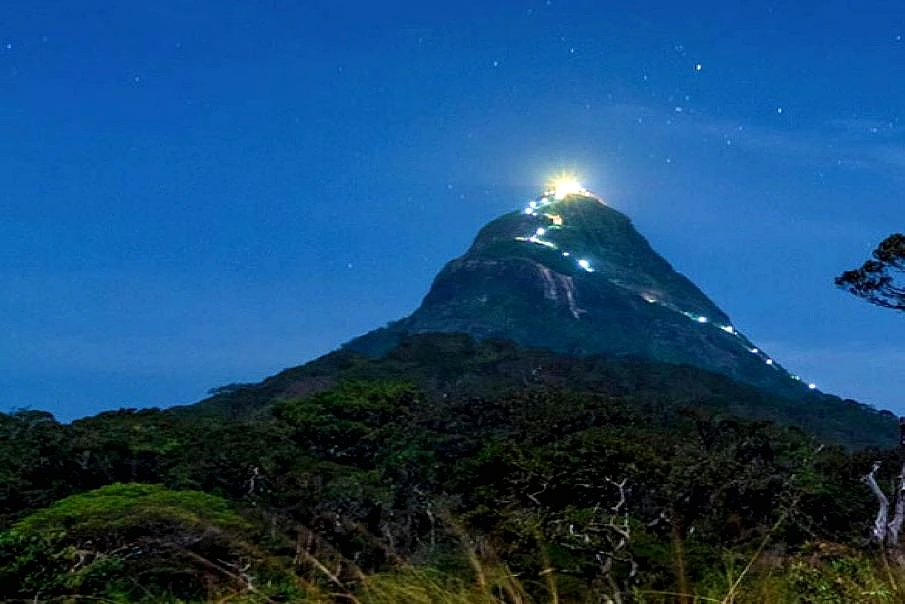
The journey to the summit of Adam’s Peak is one of the most famous pilgrimages in Asia. Every year, thousands of devotees climb the mountain during the official pilgrimage season, which usually runs from December to May. During this time the entire route to the top is illuminated with lights, and food stalls, tea shops, and resting places operate along the trail to support pilgrims.


The climb typically begins from the village of Nallathanniya (also known as Dalhousie), which is the most popular starting point. From here, visitors must climb over 5,000 steps to reach the summit. The journey usually takes between 2.5 to 4 hours, depending on fitness level and crowd size.


Many pilgrims begin the climb late at night, often around 1:00 AM or 2:00 AM, so that they can reach the summit before sunrise. Reaching the top just before dawn allows visitors to witness one of the most breathtaking natural experiences in Sri Lanka.


The Famous Sunrise 🌅

The sunrise at Adam's Peak is legendary. As the sun slowly rises above the surrounding mountain ranges, the sky turns shades of orange, pink, and gold. One of the most fascinating sights during sunrise is the perfect triangular shadow of the mountain projected onto the clouds and mist below.


This rare natural phenomenon creates a magical atmosphere and is one of the main reasons why travelers from around the world visit Sri Pada. On clear mornings, the view from the summit stretches across vast forests, valleys, rivers, and distant mountain ranges.


Natural Beauty and Biodiversity 🌿

Adam’s Peak is located within the Peak Wilderness Sanctuary, a protected rainforest area that forms part of the Central Highlands of Sri Lanka UNESCO World Heritage region. The surrounding environment is rich in biodiversity and contains many species of plants and animals found nowhere else in the world.


During the climb, visitors pass through cool mountain air, dense forest vegetation, and flowing streams. The peaceful natural setting combined with the spiritual atmosphere makes the journey both physically challenging and spiritually rewarding.


Wildlife in the region includes rare birds, butterflies, and small mammals, though they are often hidden within the forest canopy. The mountain also plays an important role in Sri Lanka’s water system, as many major rivers originate from this highland region.


Cultural and Spiritual Significance ✨

For centuries, Sri Pada has been a symbol of faith, endurance, and unity. Pilgrims of all ages—from young children to elderly devotees—make the challenging climb as an act of devotion and personal reflection.


At the summit, visitors will find a small temple structure protecting the sacred footprint, along with bells that pilgrims ring to mark the number of times they have completed the climb. The moment of reaching the summit often becomes an emotional and unforgettable experience for many visitors.


Because of its spiritual importance, breathtaking scenery, and historic traditions, **Sri Pada remains one of the most treasured landmarks in Sri Lanka, combining religion, nature, and adventure into a single extraordinary destination.

 

Travel Context

Practical, Sri Lanka-specific detail for Sri Pada / Pico de Adão — where it sits, how far it really is, what it costs and how to behave so your visit is welcome.

Where you are

This destination sits in Distrito de Ratnapura, província de Sabaragamuwa — Distrito de Ratnapura, província de Sabaragamuwa District, Sri Lanka. Distances look short on a map but Sri Lankan roads are slow, so plan fewer stops per day than you would at home.

Distance from Colombo

Roughly 95 km by road from Colombo, which is about 2.5 hours depending on traffic, the route and the time of day. The straight-line distance is shorter — allow extra time for hill-country bends, wildlife crossings and roadside stops.

Climate & season

December – April The south and west coasts are driest from December to March; the east coast from April to September. Conditions change quickly in the hill country, where mist and afternoon rain are routine.

What it costs

Entry is listed as Free. Budget separately for transport, food and any guide. Foreign-visitor tickets at major sites are priced in USD, and card machines are unreliable outside the main towns — carry rupees in small notes.

Etiquette & safety

Start early, carry at least two litres of water per person, and tell your guesthouse your route. Trails often cross private tea-estate or temple land, so stay on marked paths and ask before crossing farmland.

Best Time to Visit

Jan
Feb
Mar
Apr
May
Jun
Jul
Aug
Sep
Oct
Nov
Dec

Traveler Snaps

Golden Sunrise Above the Clouds
Night Pilgrimage to the Sacred Peak
Sunrise Magic at Adam’s Peak
Share Your Snap Here

Local Weather

Sabaragamuwa Province Overcast clouds
18°
Feels like 17°C
70% 0.57 km/h
Overcast clouds
Keep Exploring

Related Travel Guides

Location & Map

Distrito de Ratnapura, província de Sabaragamuwa
Get Directions

Fuel Cost Calculator

How to Get There

The most common starting point for climbing Adam's Peak is Nallathanniya (Dalhousie village).


Public Transport:
Travel by train to Hatton, then take a bus or taxi to Nallathanniya which takes about 1.5 hours.


Private Travel:
Driving from Colombo takes about 4–5 hours, while traveling from Kandy usually takes around 3 hours.

Safety & Travel Tips

Wear comfortable hiking shoes and warm clothing.
Carry water and light snacks for the climb.
Start the hike early at night to reach the summit before sunrise.
Expect cooler temperatures and strong winds at the top.
Respect the religious nature of the site and behave appropriately.

Nearby Amenities

Small hotels and guesthouses
Local restaurants and tea shops
Convenience stores and pilgrim rest areas
Parking areas and tuk-tuk services
 

Sri Lanka Essentials

The things that catch visitors out on a first trip — money, connectivity, transport, health and the small etiquette rules that make a real difference.

Money & payments

The currency is the Sri Lankan rupee (LKR). Cards work in hotels, supermarkets and larger restaurants, but tuk-tuks, small entry gates, beach cafés and village shops are cash-only. Draw from bank ATMs in towns rather than standalone machines, keep small notes for change, and carry enough cash for two days when you head into the hill country or the north.

Connectivity & data

A local tourist SIM (Dialog, Mobitel or Hutch) is cheap and easy to buy at the airport or in any town with your passport. Coverage is good on the coasts and in towns, patchier in the Knuckles, parts of the north and inside national parks. Download offline maps and screenshots of bookings before remote drives.

Getting around

Trains are slow, scenic and very cheap — the hill-country line is the highlight. Buses cover almost everywhere but can be crowded. Tuk-tuks suit short hops; agree the fare first or use a metered app. Private drivers are good value for multi-stop days. Distances take longer than the map suggests: 100 km can easily be three hours.

Health & safety

Dengue is present, so use repellent and cover up at dusk. Drink bottled or filtered water, and be careful with ice in remote places. The sun is strong even when overcast. Pharmacies are common in towns; serious care is concentrated in Colombo. Travel insurance that covers adventure activities is worth having.

Responsible travel

Sri Lanka is small and heavily visited — small choices add up. Refuse plastic bags and single-use bottles where you can, avoid elephant rides and any attraction that chains wildlife, dress modestly at religious sites, and buy directly from local guides, homestays and cafés rather than international middlemen.

Holidays & opening hours

Poya (full moon) days are public holidays: temples are busy, some shops close and the sale of alcohol is restricted. Many archaeological sites open at 7am and close by 5–6pm, and last entry is usually an hour earlier. Check opening days before building a long drive around one site.

Traveler Reviews (1)

D
dilshan Jul 18, 2026

Woow 😍

✍️ Leave a Review

Frequently Asked

Most hikers take 2.5 to 4 hours to reach the summit depending on their pace and crowd levels.
The best time is during the pilgrimage season from December to May when the trail is fully lit and facilities are open.
Yes, but it requires moderate fitness since there are more than 5,000 steps to the summit.
Weekly Dispatch

Get Travel Inspiration

Hidden gems, local tips & exclusive guides from Sri Lanka, Asia and beyond — delivered to your inbox, weekly.

No spam, ever. Unsubscribe anytime.