The Guide
Contents
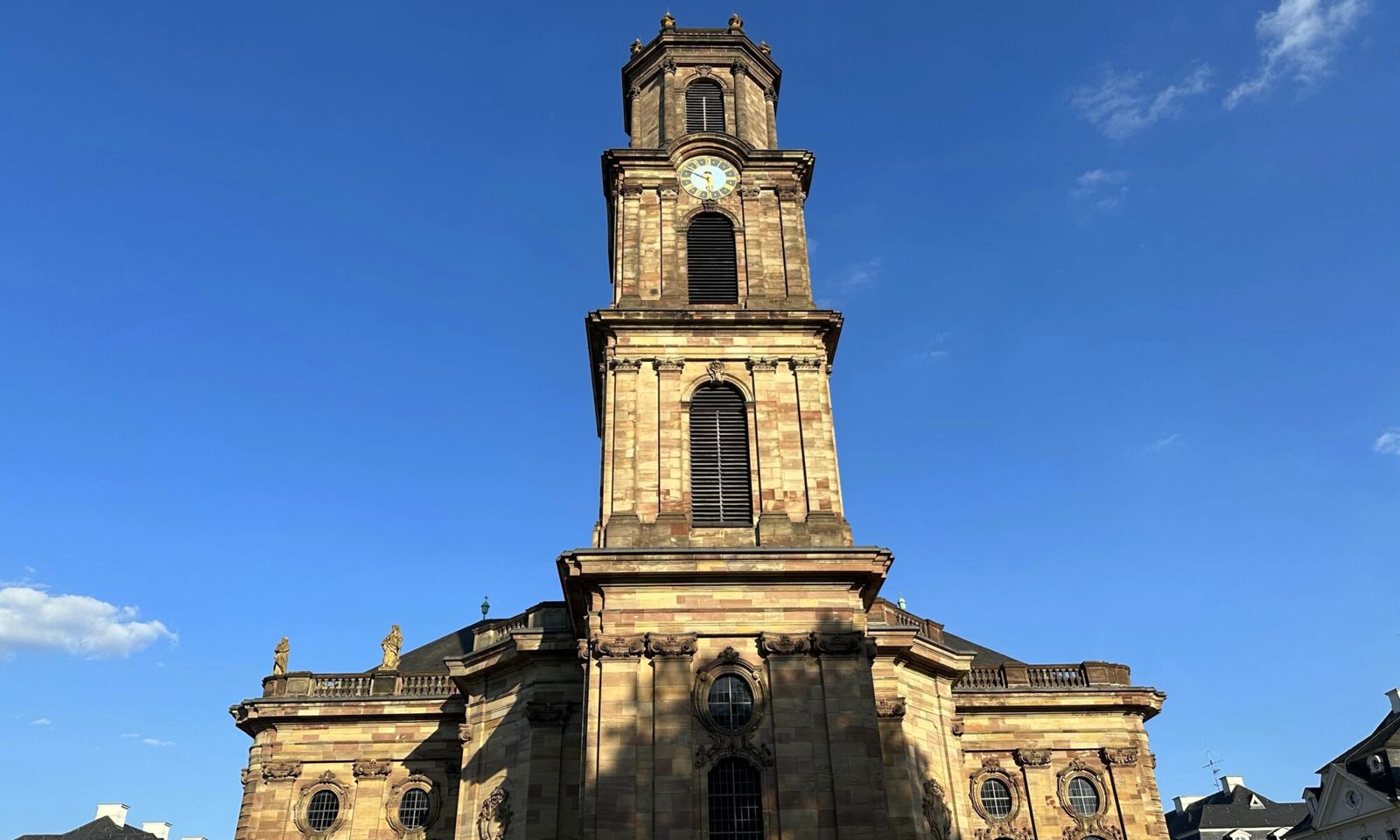
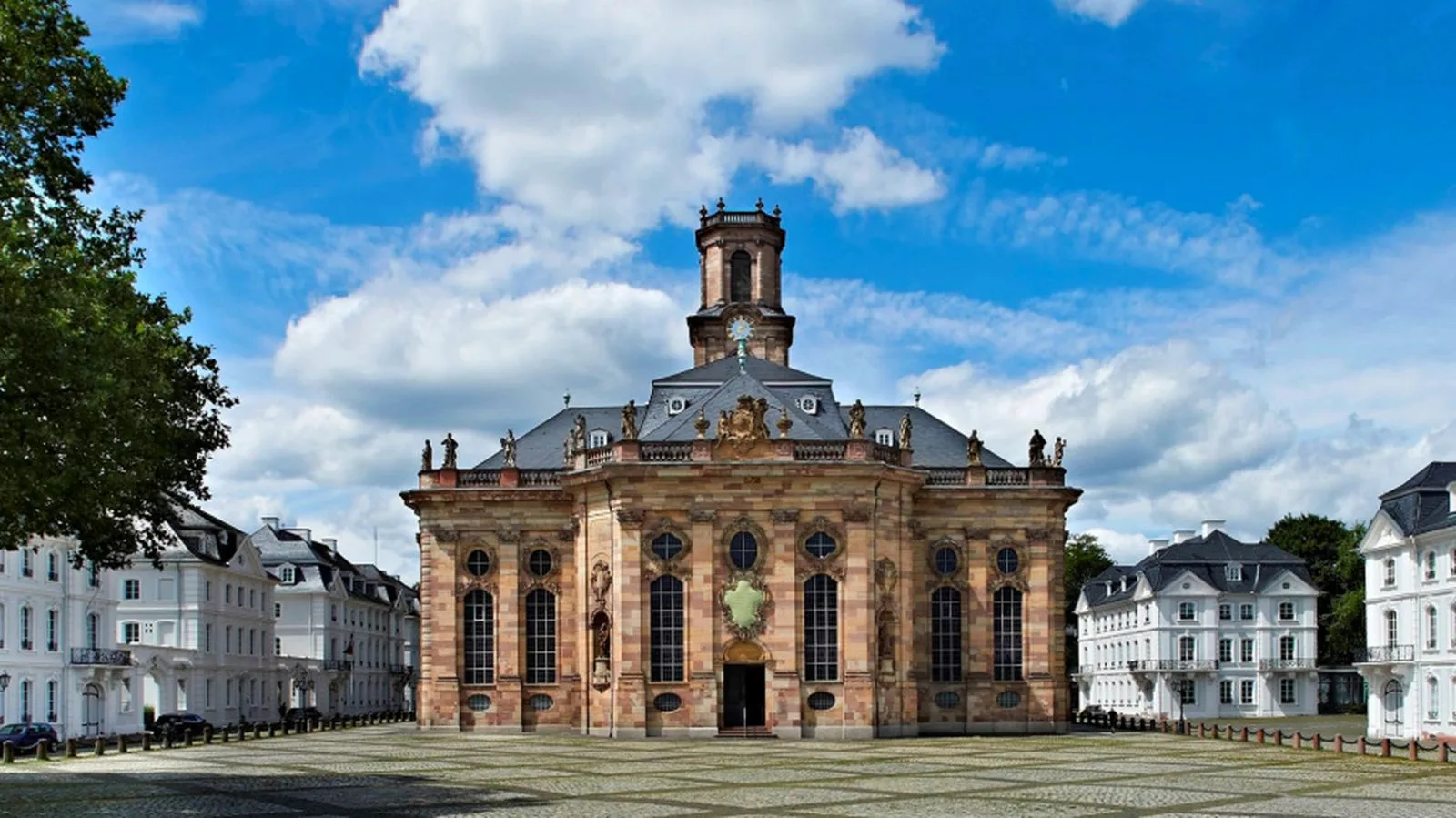
Step into the heart of Saarbrücken and find yourself transported to an era of grandeur, where the magnificent Ludwigskirche stands as a testament to Baroque brilliance. Its gleaming white facade, intricate carvings, and towering spires pierce the sky, commanding attention and reverence. This architectural masterpiece, often hailed as one of Germany's most significant Baroque Protestant churches, is more than just a place of worship; it's a profound cultural landmark, a beacon of history, and an artistic marvel.
Designed by the renowned architect Friedrich Joachim Stengel, the Ludwigskirche embodies the ideal 'Protestant Baroque' style. Its construction, spanning from 1762 to 1775, was a monumental undertaking commissioned by Prince William Henry and completed under his son, Prince Louis of Nassau-Saarbrücken, after whom the church is named. Walking around its exterior, you'll be struck by the harmonious proportions and the rich sculptural details that adorn every corner. The four identical towers, each capped with an elegant cupola, create a sense of symmetry and balance that is both powerful and graceful. The sheer scale and meticulous craftsmanship speak volumes about the ambition and artistic vision of its creators.
A Symphony in Stone: The Exterior's Grandeur 🕊️
The exterior of the Ludwigskirche is a masterclass in architectural composition. The light-colored sandstone, characteristic of the region, shimmers under the Saarland sun, making the church appear almost ethereal. As you approach, note the elaborate portal, framed by columns and adorned with figures that seem to whisper tales of centuries past. The central pediment features the coat of arms of the House of Nassau-Saarbrücken, a subtle yet powerful reminder of its royal patronage. Each of the four corner towers, crowned with a graceful lantern and onion dome, contributes to the church's iconic silhouette, visible from various points across the city. The interplay of light and shadow on the detailed facades creates a dynamic visual experience that changes throughout the day, inviting contemplation and admiration. Even the surrounding square, Ludwigsplatz, is an integral part of Stengel's overall design, a perfectly symmetrical Baroque ensemble that enhances the church's prominence. The square itself is flanked by equally impressive, though smaller, Baroque palaces, originally built as government buildings, all contributing to the unified aesthetic vision.
The preservation efforts over the centuries have ensured that the Ludwigskirche retains its original splendor, despite suffering significant damage during World War II. Its meticulous reconstruction, adhering faithfully to Stengel's original plans, is a testament to the community's dedication to its heritage. This commitment ensures that visitors today can experience the church much as it was intended to be seen by its 18th-century patrons. The choice of materials, the precision of the stone carving, and the overall monumental scale all contribute to a sense of awe and reverence, making the approach to the church an experience in itself.
Inside the Sacred Space: An Ode to Light and Harmony ✨
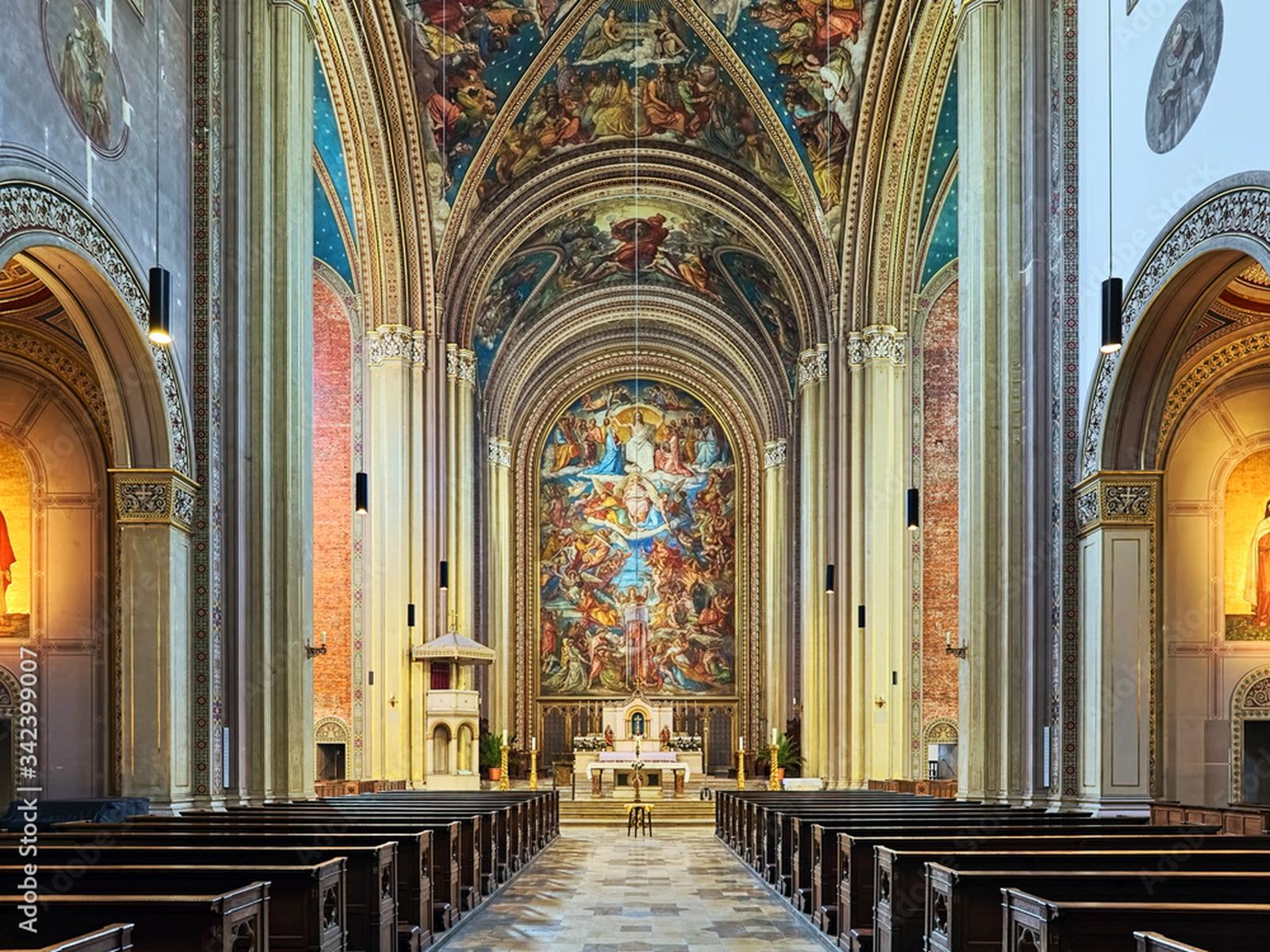
Stepping inside the Ludwigskirche is like entering a realm of serene beauty. The interior, bathed in natural light filtering through tall, arched windows, is a breathtaking example of Protestant Baroque design. Unlike many Catholic Baroque churches that are often overtly opulent and filled with dramatic frescoes, the Ludwigskirche's interior is characterized by a refined elegance and a focus on clarity and light. The dominant color scheme of white and gold creates an atmosphere of purity and spaciousness. The eye is immediately drawn upwards, towards the soaring ceilings and the impressive organ, a focal point of both visual and auditory grandeur.
The layout is a Greek cross plan, a relatively rare choice for Protestant churches of this period, contributing to its unique character. This design ensures that the altar, pulpit, and organ are centrally placed and equally visible from all parts of the congregation, emphasizing the importance of the sermon and communal worship. The galleries, running along the arms of the cross, provide additional seating and add to the sense of expansive space. The intricate stucco work, though less flamboyant than its Catholic counterparts, is exquisitely detailed, featuring delicate rococo motifs and allegorical figures that enhance the spiritual ambiance without overwhelming the senses.
One of the most remarkable features is the original pulpit, an intricately carved masterpiece that stands as a testament to the skill of the Baroque artisans. Positioned prominently, it underscores the centrality of the spoken word in Protestant worship. The altar, though simpler than in Catholic churches, is nevertheless a dignified focal point, often adorned with seasonal floral arrangements that add touches of color to the otherwise pristine white and gold interior. The acoustics of the church are also exceptional, making it a popular venue for concerts and recitals, where the music truly fills the vast space and resonates with visitors.
The stained-glass windows, though not original (the originals were destroyed in the war and replaced with modern interpretations that still respect the church's aesthetic), allow a kaleidoscope of colors to dance across the white walls on sunny days, adding another layer of visual beauty. These windows often depict biblical scenes or abstract patterns, enhancing the spiritual narrative of the space. The overall impression is one of harmonious balance, a place where architectural grandeur and spiritual contemplation coexist beautifully. Visitors often find themselves lingering, taking in the intricate details, feeling the quiet reverence that permeates the air, and appreciating the masterful blend of art and devotion.
The Organ's Voice: A Resounding Heritage 🎶
No visit to Ludwigskirche is complete without acknowledging its magnificent organ. While the current instrument is a reconstruction and restoration of the original Stumm organ, it faithfully recreates the tonal qualities and grandeur of its 18th-century predecessor. The original organ, built by the renowned Stumm family, was considered one of the finest in Germany. Its destruction during the war was a significant loss, but the painstaking efforts to rebuild it have ensured that its majestic voice once again fills the church.
The organ casing itself is a work of art, adorned with intricate carvings and gilded details that perfectly complement the church's interior. Its sheer size is impressive, dominating the western gallery. When played, its rich, resonant tones reverberate through the vast space, creating an immersive auditory experience. The Ludwigskirche regularly hosts organ concerts, drawing musicians and enthusiasts from across the globe. Attending one of these performances is highly recommended, as it allows you to truly appreciate the instrument's power and the church's exceptional acoustics. The sound is not merely heard; it is felt, a profound vibration that connects the listener to centuries of musical tradition within these hallowed walls. The organ's pipes, arranged in a visually stunning display, seem to reach for the heavens, a fitting metaphor for the spiritual aspirations of the church itself. The craftsmanship involved in both the original and its recreation speaks volumes about the dedication to preserving the artistic and musical heritage of the region.
Surrounding Splendor: Ludwigsplatz and Beyond 🌳
The Ludwigskirche is not an isolated monument; it is the centerpiece of the magnificent Ludwigsplatz, a Baroque square that forms an integral part of Stengel's urban planning vision. The square itself is a perfectly symmetrical ensemble, flanked by elegant Baroque palaces that originally served as government buildings for the principality. These buildings, now largely occupied by various public institutions, maintain the harmonious architectural style of the period, creating a unified and aesthetically pleasing environment.
Strolling through Ludwigsplatz, you can appreciate the thoughtful urban design, where every element contributes to the overall grandeur. The wide, tree-lined avenues that lead to the church emphasize its central importance. Benches are strategically placed, inviting visitors to sit and admire the views, taking in the architectural details of both the church and the surrounding palaces. The square is a popular spot for locals and tourists alike, a peaceful oasis in the bustling city, perfect for a moment of reflection or a leisurely walk. During warmer months, the trees provide welcome shade, and the open space often hosts cultural events or markets, adding to its vibrant atmosphere. The unified architectural style of Ludwigsplatz makes it one of Germany's most beautiful Baroque squares, offering a complete historical experience. Beyond the square, Saarbrücken offers a charming mix of historical sites, modern shopping, and riverside strolls along the Saar, making Ludwigskirche a perfect starting point for exploring the city. The proximity to the Saarland Museum and the Old Town (Altstadt) means that cultural immersion is just a short walk away, rounding out a truly enriching visit to this vibrant German city.