تمثال بوذا أفوكانا

تمثال بوذا أفوكانا

4.7 · 0 reviews 65 views Last updated Nov 19, 2026
4.7Rating
The dry season from December to April is ideal for a comfortable visit.Best Time
LKR 500 locals / USD 10 foreigners (approximate)Entry Fee
1-2 HoursSuggested Time
EasyDifficulty
7 minRead Time

Where to stay near تمثال بوذا أفوكانا

Compare live prices with our booking partners.

Some links below are affiliate links. If you book through them we may earn a small commission — at no extra cost to you. How this works.

Cost & practical info

Entry fee LKR 500 locals / USD 10 foreigners (approximate) Confirm current fees on site
Best time to visit The dry season from December to April is ideal for a comfortable visit.
Suggested time 1-2 Hours
Difficulty Easy

Prices and opening hours can change — always confirm with the official site before you travel.

The Guide

Imagine, if you will, the 5th century. A time of intricate craftsmanship, profound devotion, and rivalries that played out not on battlefields, but in the very stone of the earth. Legend has it that two master sculptors, a guru and his shishya (disciple), embarked on a monumental challenge. One was to carve a colossal Buddha statue at Avukana, the other at Sasseruwa. The agreement was simple: whoever finished first would ring a bell, signaling their triumph. Day and night, chisels sang against rock. Finally, a bell chimed! It was the guru, completing the magnificent Avukana Buddha. The disciple, hearing the bell, is said to have abandoned his nearly finished work, leaving it as a testament to the guru's unparalleled skill. Stepping onto the sacred grounds of Avukana, you can almost hear the echoes of that ancient bell, feel the devotion poured into every chisel mark, and understand the sheer dedication that brought this wonder to life. It’s more than just a statue; it’s a story whispered across centuries, a silent sentinel of faith and artistic mastery.

✨ First Glimpse: Awe-Inspiring Grandeur! ✨

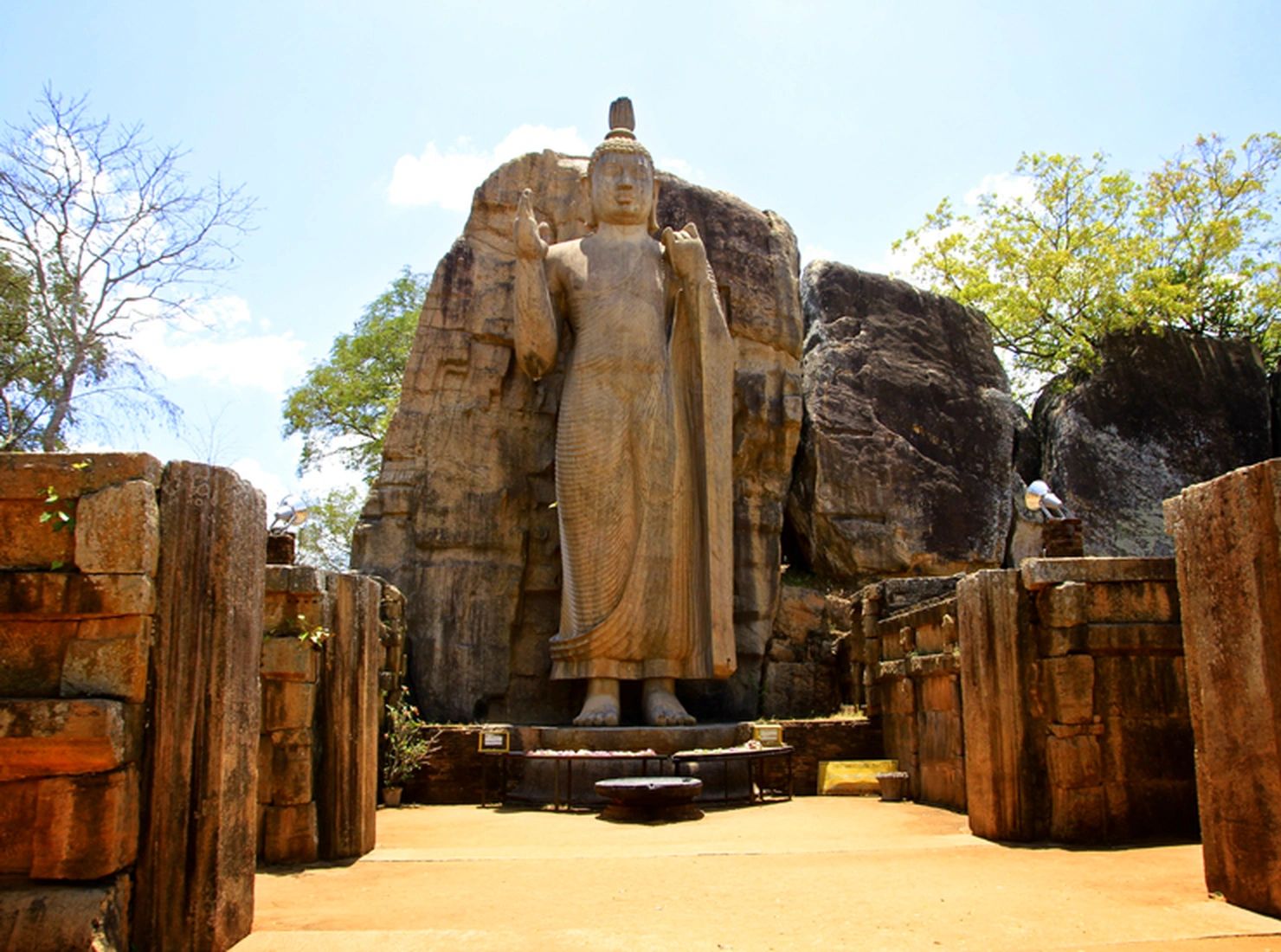
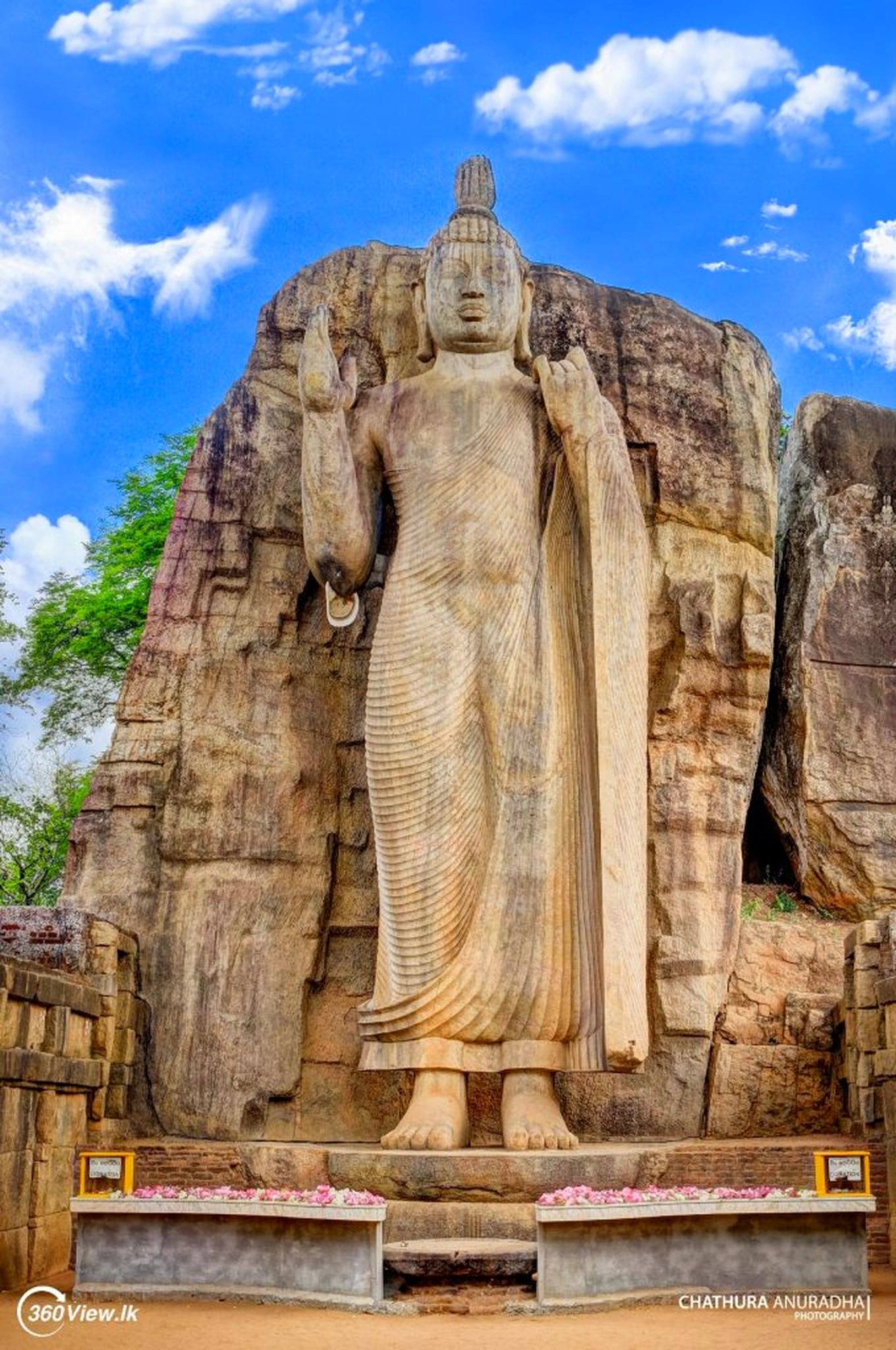
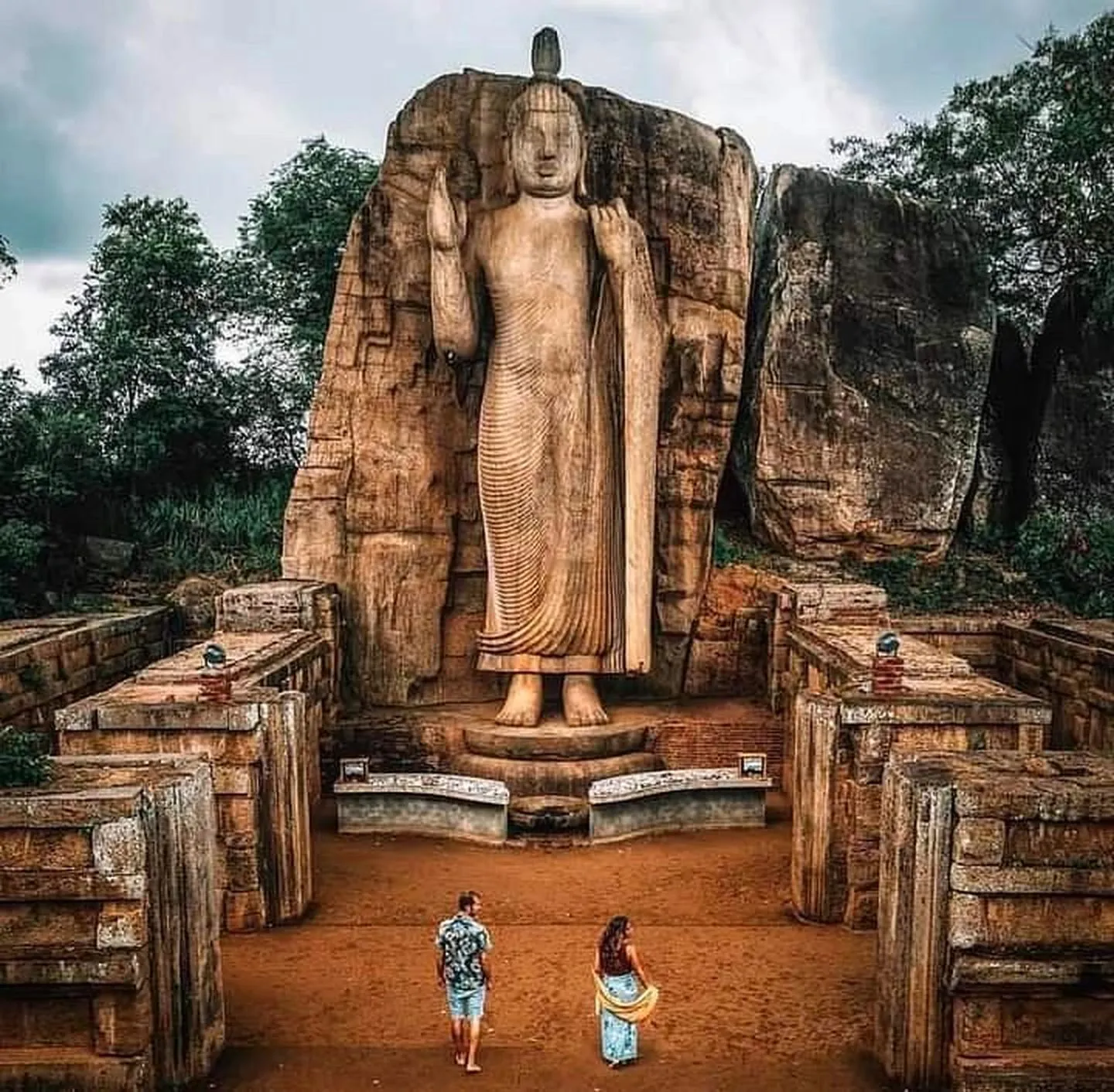
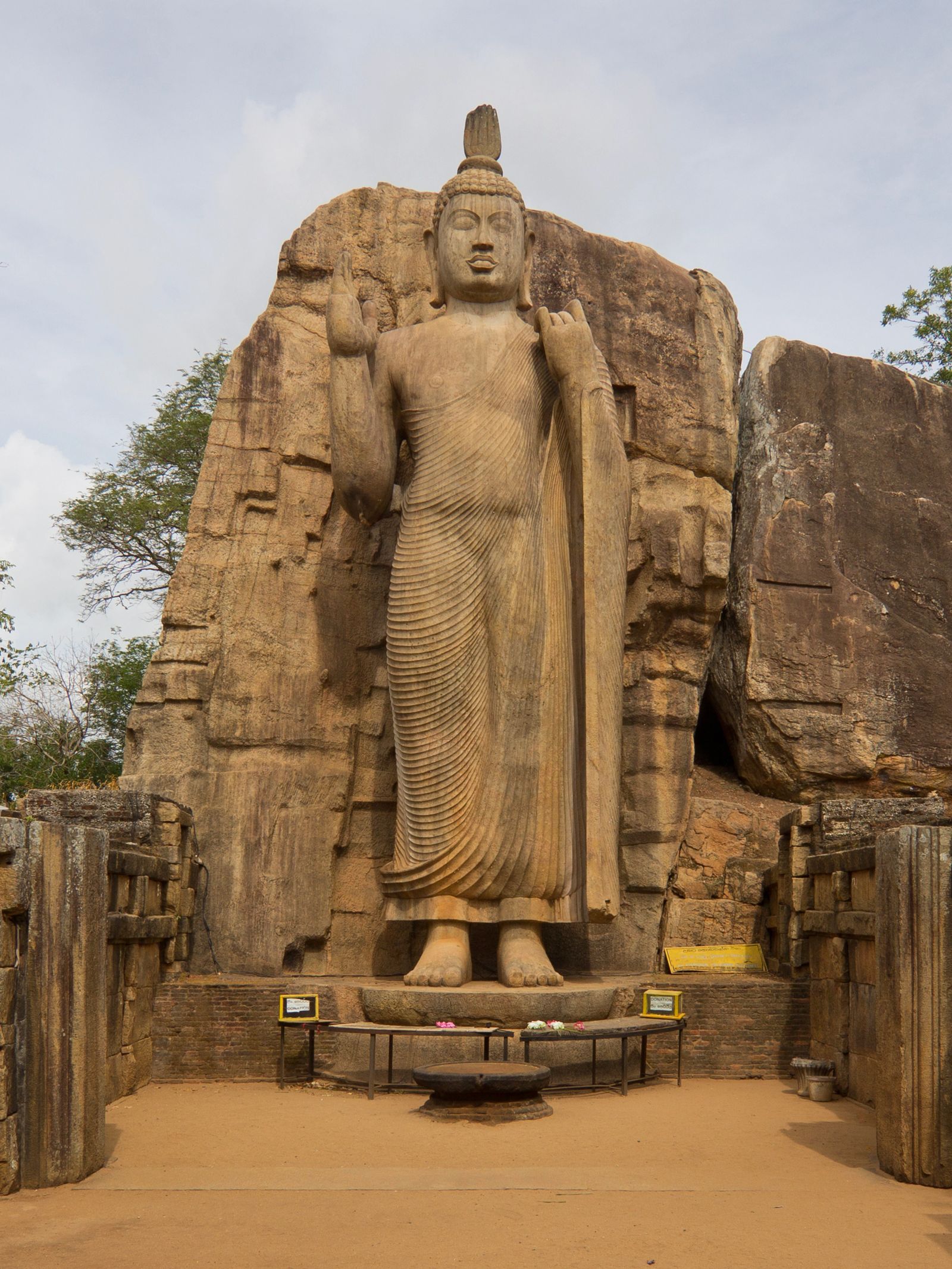
The first thing that hits you as you approach the Avukana Buddha is its sheer scale. It’s absolutely colossal! Standing at an astounding 40 feet (12 meters) tall, carved out of a single, massive granite rock face, it commands your attention with an almost magnetic force. You walk up a series of steps, and with every step, the statue seems to grow, its serene face becoming clearer, its intricate details slowly revealing themselves. The sense of peace and tranquility emanating from this ancient masterpiece is palpable. It’s not just a large statue; it’s a spiritual experience that unfolds before your very eyes. I found myself simply standing there, gazing up, mouth agape, trying to absorb every detail of this incredible feat of ancient engineering and artistry. The scale is truly humbling, making you feel tiny yet connected to something immense and timeless. It’s a moment that stays with you long after you’ve left.

The location itself adds to the mystique. Nestled amidst lush greenery and ancient trees, it feels like a hidden gem, a sacred secret waiting to be discovered. The air is often filled with the gentle rustle of leaves and the distant chirping of birds, creating a natural symphony that complements the statue's peaceful aura. There's a subtle spirituality that permeates the atmosphere, inviting contemplation and quiet reverence. It's not a bustling tourist hub; rather, it’s a place for quiet reflection, a chance to connect with history and spirituality on a deeper level. I loved how the natural surroundings enhanced the statue’s presence, making it feel truly at one with the land.

🗿 Decoding the Masterpiece: Carving & Symbolism 🗿

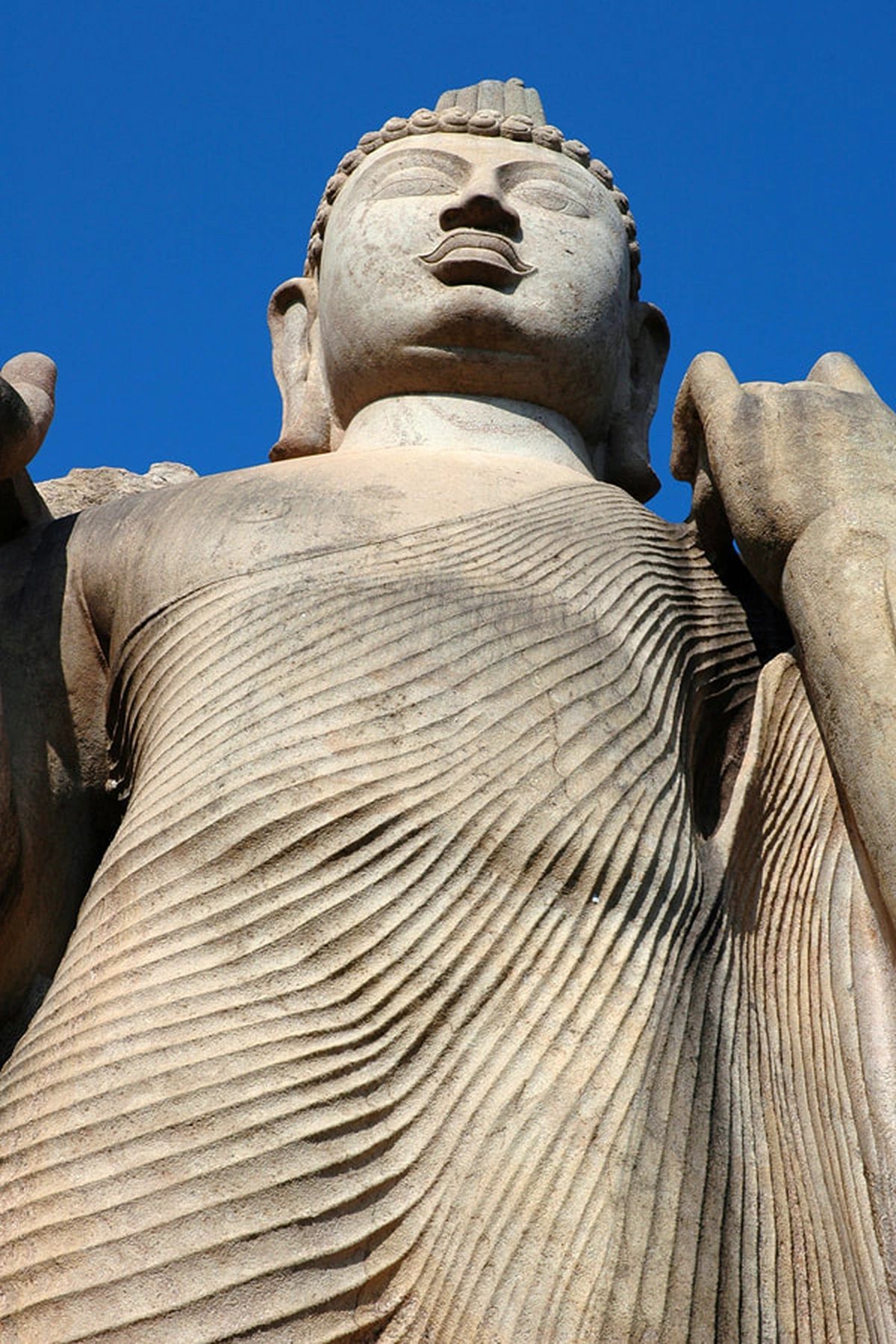
What truly fascinates me about the Avukana Buddha is the incredible detail and the masterful execution, especially considering it was carved over 1500 years ago! The statue depicts the Buddha in the 'Abhaya Mudra,' a gesture of fearlessness and reassurance, with his right hand raised to the shoulder and the palm facing outwards. His left hand is held close to the body, fingers curled. This mudra is incredibly powerful, conveying a sense of protection and peace. His robes are carved with such fluidity that they appear to drape naturally, almost as if made of soft cloth rather than solid stone. The precision in the folds, the delicate carving of the fingers, and the serene expression on his face are simply breathtaking. You can spend ages just admiring the intricate lines and contours, each telling a story of devotion and skill.

The statue also showcases the distinct 'Samabhanga' posture, where the body is perfectly straight, without any bend, emphasizing stability and balance. The elongated earlobes, a common feature in Buddha statues, symbolize his renunciation of worldly possessions, having once worn heavy earrings as a prince. The 'urna' – a dot between the eyebrows – represents spiritual insight, and the 'ushnisha' – the cranial protuberance on the top of his head – signifies his attainment of enlightenment. Every single element, from the subtle smile to the intricate hair curls, is imbued with deep symbolic meaning, making it a profound visual representation of Buddhist philosophy. It’s like reading a sacred text etched in stone, each detail a chapter in itself. The more you learn about the symbolism, the more profound the experience becomes, adding layers of appreciation to this ancient marvel.

🌿 Surrounding Serenity: A Natural Sanctuary 🌿

Beyond the colossal statue itself, the surrounding environment at Avukana is a beautiful, tranquil retreat. The statue is situated near the Kala Wewa reservoir, an ancient irrigation tank also built during the reign of King Dhatusena, the same monarch credited with commissioning the Avukana Buddha. The reservoir is a marvel of ancient hydraulic engineering and contributes significantly to the peaceful ambiance of the area. The walk up to the statue is pleasant, lined with trees and often shaded, offering a refreshing respite from the tropical sun. You’ll notice pilgrims offering flowers and incense, adding to the spiritual atmosphere. It’s a place where you can truly slow down, breathe deeply, and soak in the serene vibes. The blend of historical significance, artistic brilliance, and natural beauty creates an unforgettable experience.

The area around Avukana is relatively undeveloped, which only adds to its charm as a truly authentic cultural site. You won't find bustling markets or flashy tourist traps here. Instead, you'll encounter local vendors selling simple offerings, and perhaps a few small stalls with refreshments. This understated approach allows the statue and its history to speak for themselves, without distraction. The drive through the countryside to get here is also a treat in itself, offering glimpses into rural Sri Lankan life, lush paddy fields, and small villages. It's a journey that prepares you for the profound experience awaiting you. I truly appreciated the untouched quality of the surroundings, making the visit feel like a genuine exploration rather than a typical tourist outing. It felt like stepping back in time, into a quieter, more spiritual era.

📸 Capturing the Moment: Photography Tips 📸

Photographing the Avukana Buddha can be a rewarding challenge! The sheer height means you'll want to experiment with different angles. Early morning or late afternoon light is always best – the golden hour casts a beautiful glow on the granite, highlighting its textures and bringing out the serene expression on the Buddha's face. Avoid midday if possible, as the harsh sun can create strong shadows and wash out details. A wide-angle lens is useful to capture the entire statue in its grandeur, especially if you want to include some of the surrounding natural elements. Don't forget to get some shots from a lower angle, looking up, to emphasize its towering presence. Also, try to capture the pilgrims and their offerings, as this adds a human element to the spiritual narrative. Remember to be respectful of those worshipping and avoid using flash, especially during prayers. It's a sacred site, so discretion and mindfulness are key. I managed to get some absolutely stunning photos by simply waiting for the perfect light and being patient. The changing light throughout the day offers completely different perspectives, so if you have the time, linger a little and observe how the statue transforms with the sun's journey across the sky. It's a photographer's dream, offering endless opportunities to capture its timeless beauty.

Another tip for photographers: consider the foreground and background. The lush trees and the vast sky can provide an excellent frame for the statue. If you’re lucky, you might even catch some interesting cloud formations that add drama to your shots. Don't just focus on the statue itself; try to compose shots that tell a broader story of the location, including the ancient architecture of the surrounding structures or the peaceful pathways leading up to the main attraction. Sometimes, a subtle detail, like a single lotus flower offered at its base, can convey as much emotion as a grand panoramic shot. Experiment with close-ups of the intricate carvings, the robes, and the serene facial features. These details often go unnoticed in wider shots but reveal the true mastery of the ancient sculptors. The challenge of capturing its majesty is part of the fun, and the results are truly rewarding, giving you a lasting memory of this magnificent site.

Travel Context

Practical, Sri Lanka-specific detail for تمثال بوذا أفوكانا — where it sits, how far it really is, what it costs and how to behave so your visit is welcome.

Where you are

Located in Sri Lanka. Distances look short on a map but roads are slow, so plan fewer stops per day than you would at home.

Distance from Colombo

Roughly 190 km by road from Colombo, which is about 5 hours depending on traffic, the route and the time of day. The straight-line distance is shorter — allow extra time for hill-country bends, wildlife crossings and roadside stops.

Climate & season

The dry season from December to April is ideal for a comfortable visit. The south and west coasts are driest from December to March; the east coast from April to September. Conditions change quickly in the hill country, where mist and afternoon rain are routine.

What it costs

Entry is listed as LKR 500 locals / USD 10 foreigners (approximate). Budget separately for transport, food and any guide. Foreign-visitor tickets at major sites are priced in USD, and card machines are unreliable outside the main towns — carry rupees in small notes.

Etiquette & safety

Remove shoes and hats before entering sacred grounds, cover shoulders and knees, and never pose with your back to a Buddha image. Walk clockwise around dagobas, keep your voice low, and photograph people only with permission.

Best Time to Visit

Jan
Feb
Mar
Apr
May
Jun
Jul
Aug
Sep
Oct
Nov
Dec

Local Weather

Dambulla Overcast clouds
31°
Feels like 32°C
43% 1.59 km/h
Overcast clouds
Keep Exploring

Related Travel Guides

Location & Map

Get Directions

Fuel Cost Calculator

How to Get There

Getting to Avukana Buddha is an adventure in itself! 🚌 train to Habarana or Kekirawa, then grab a tuk-tuk 🚕 for the remaining journey. From Dambulla or Sigiriya, it's about a 1.5-2 hour drive by car 🚗 or tuk-tuk. Buses also operate to Kekirawa from major towns. The roads are generally good, offering scenic views of the Sri Lankan countryside. If you're coming from Anuradhapura, it's approximately a 1-hour drive.

Safety & Travel Tips

⏰ Go Early: Beat the heat and the small crowds. The morning light is also fantastic for photos! ☀️
respectful by dressing modestly (shoulders and knees covered). It's a sacred site. 🙏
Stay Hydrated: Carry water, especially if visiting during warmer months. 💧
Wear Comfortable Shoes: There are steps to climb and grounds to explore. 👟
Bring Cash: For small purchases or offerings, as card facilities might be limited. 💰
Silence is Golden: Maintain a quiet demeanor to respect the spiritual atmosphere. 🤫
Sun Protection: A hat and sunscreen are advisable. 🧢🧴

Nearby Amenities

🍽️ Local Eateries: A few simple local restaurants and snack stalls can be found near the site, offering traditional Sri Lankan fare.
🏨 Accommodation: Limited guesthouses are available in the immediate vicinity, but more options can be found in nearby Kekirawa, Habarana, or Dambulla.
🏧 ATM: The nearest ATM facilities are in Kekirawa or Habarana, so it’s wise to carry cash.
🏥 Hospital/Clinic: Basic medical clinics are in Kekirawa; for major emergencies, you'd need to go to larger towns like Dambulla or Anuradhapura.
🚽 Restrooms: Basic restroom facilities are usually available on-site.

Sri Lanka Essentials

The things that catch visitors out on a first trip — money, connectivity, transport, health and the small etiquette rules that make a real difference.

Money & payments

The currency is the Sri Lankan rupee (LKR). Cards work in hotels, supermarkets and larger restaurants, but tuk-tuks, small entry gates, beach cafés and village shops are cash-only. Draw from bank ATMs in towns rather than standalone machines, keep small notes for change, and carry enough cash for two days when you head into the hill country or the north.

Connectivity & data

A local tourist SIM (Dialog, Mobitel or Hutch) is cheap and easy to buy at the airport or in any town with your passport. Coverage is good on the coasts and in towns, patchier in the Knuckles, parts of the north and inside national parks. Download offline maps and screenshots of bookings before remote drives.

Getting around

Trains are slow, scenic and very cheap — the hill-country line is the highlight. Buses cover almost everywhere but can be crowded. Tuk-tuks suit short hops; agree the fare first or use a metered app. Private drivers are good value for multi-stop days. Distances take longer than the map suggests: 100 km can easily be three hours.

Health & safety

Dengue is present, so use repellent and cover up at dusk. Drink bottled or filtered water, and be careful with ice in remote places. The sun is strong even when overcast. Pharmacies are common in towns; serious care is concentrated in Colombo. Travel insurance that covers adventure activities is worth having.

Responsible travel

Sri Lanka is small and heavily visited — small choices add up. Refuse plastic bags and single-use bottles where you can, avoid elephant rides and any attraction that chains wildlife, dress modestly at religious sites, and buy directly from local guides, homestays and cafés rather than international middlemen.

Holidays & opening hours

Poya (full moon) days are public holidays: temples are busy, some shops close and the sale of alcohol is restricted. Many archaeological sites open at 7am and close by 5–6pm, and last entry is usually an hour earlier. Check opening days before building a long drive around one site.

Traveler Reviews (0)

Be the first to review تمثال بوذا أفوكانا!

✍️ Leave a Review

Frequently Asked

The Avukana Buddha Statue is one of Sri Lanka's most magnificent ancient sculptures, depicting the Buddha in the Abhaya Mudra (gesture of fearlessness). It's a testament to ancient Sinhalese craftsmanship and devotion, believed to have been carved in the 5th century during the reign of King Dhatusena.
The statue stands at an impressive height of approximately 40 feet (12 meters), carved entirely out of a single granite rock face.
Yes, there is an entry fee, which differs for locals and foreign visitors. Please check current rates upon arrival.
Avukana is often visited as part of a day trip from the Cultural Triangle (Dambulla, Sigiriya, Polonnaruwa, Anuradhapura). It can be easily combined with a visit to the nearby Kala Wewa reservoir or the Sasseruwa Buddha statue.
Yes, photography is generally allowed, but visitors are requested to be respectful, especially during worship, and avoid using flash inside any sacred areas.
As it is a sacred religious site, visitors are expected to dress modestly, covering their shoulders and knees. It's also advisable to remove hats when approaching the statue.
Weekly Dispatch

Get Travel Inspiration

Hidden gems, local tips & exclusive guides from Sri Lanka, Asia and beyond — delivered to your inbox, weekly.

No spam, ever. Unsubscribe anytime.