圣克莱尔瀑布
瀑布 4 min read

圣克莱尔瀑布

0.0 · 0 reviews 112 views Last updated Nov 19, 2026
塔拉瓦卡莱, 努沃勒埃利耶
0.0Rating
October to January (monsoon season for best flow)Best Time
FreeEntry Fee
2 HoursSuggested Time
EasyDifficulty
4 minRead Time

Where to stay near 圣克莱尔瀑布

Compare live prices with our booking partners.

Some links below are affiliate links. If you book through them we may earn a small commission — at no extra cost to you. How this works.

Cost & practical info

Entry fee Free Confirm current fees on site
Best time to visit October to January (monsoon season for best flow)
Suggested time 2 Hours
Difficulty Easy

Prices and opening hours can change — always confirm with the official site before you travel.

The Guide

⛰️ Introduction to St. Clair's Falls: The 'Little Niagara' of Sri Lanka

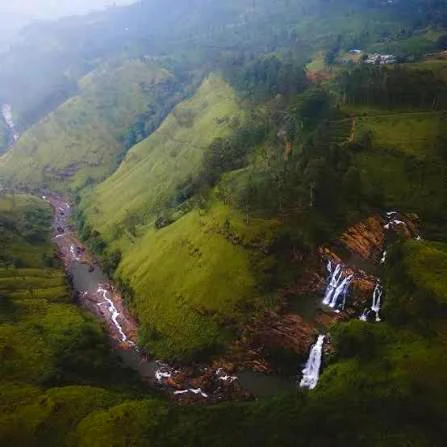
Nestled amidst the emerald tea plantations and mist-shrouded hills of the Nuwara Eliya district, St. Clair's Falls stands as one of Sri Lanka's most breathtaking natural wonders. Often dubbed the 'Little Niagara' due to its sheer size and impressive cascade, this magnificent waterfall is a testament to the island's raw, untamed beauty. Located near the bustling town of Thalawakale, St. Clair's is not just a single drop but a majestic two-tiered waterfall, formed by the Kotmale Oya, a tributary of the Mahaweli River. Its grandeur is truly captivating, especially during the monsoon season when the water volume is at its peak, creating a thunderous roar and a mesmerizing misty spray that drifts across the surrounding valley.

💦 The Magnificent Cascade: A Symphony of Nature

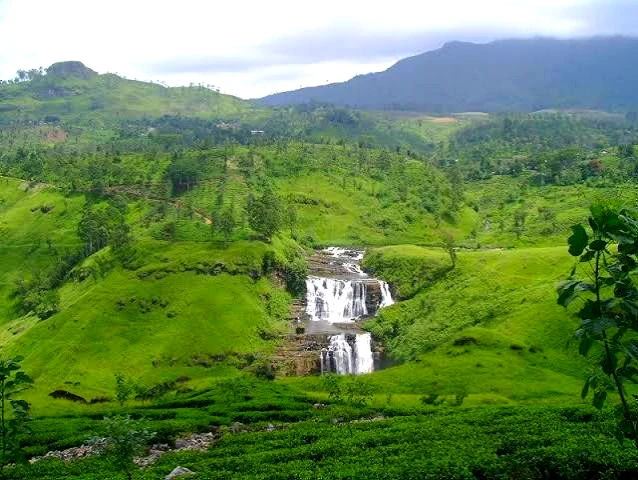
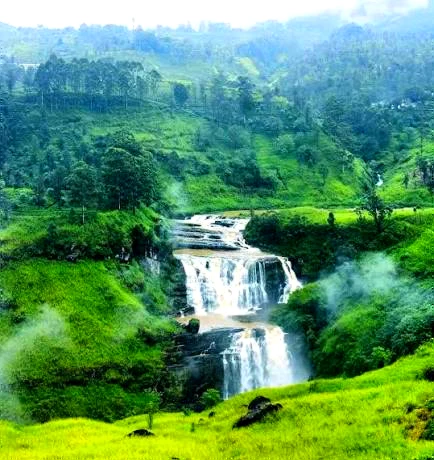
St. Clair's Falls is classified as a 'Plunge' type waterfall, with its waters plummeting dramatically over rocky ledges. It consists of two main sections: the 'Maha Ella' (Sinhala for 'The Greater Fall') and the 'Kuda Ella' (Sinhala for 'The Lesser Fall'). The Maha Ella, the more prominent of the two, plunges approximately 80 meters (260 feet) into a wide pool below, spanning an impressive 50 meters (160 feet) in width. The Kuda Ella, while smaller, is equally picturesque, dropping around 50 meters (160 feet). The sheer scale and power of these cascades are awe-inspiring. The sight of the water relentlessly carving its path through the ancient rocks, surrounded by vibrant green foliage, is a photographer's dream and a nature lover's paradise. The constant mist creates a unique microclimate, fostering lush vegetation and a vibrant ecosystem around the falls.

🌿 Surrounding Beauty: Tea Plantations and Verdant Landscapes

The journey to St. Clair's Falls is as enchanting as the destination itself. The falls are elegantly framed by endless rows of verdant tea bushes, which carpet the undulating hillsides as far as the eye can see. This region is the heartland of Ceylon tea, and the sight of tea pluckers diligently working the fields adds a touch of local charm to the already stunning panorama. The air is crisp and cool, carrying the faint scent of fresh tea leaves and damp earth. Driving or taking the train through this landscape offers uninterrupted views of the falls from various vantage points along the Hatton-Nuwara Eliya road, making it one of the most scenic routes in Sri Lanka. The best views are often from a distance, allowing you to appreciate the full scale of the falls against the backdrop of the rolling hills.

📸 Photography Opportunities: Capturing the Grandeur

For photography enthusiasts, St. Clair's Falls offers unparalleled opportunities. Whether you're aiming for wide landscape shots capturing the entire two-tiered spectacle or close-ups of the powerful cascades, the lighting and natural setting are incredibly cooperative. Early mornings or late afternoons often provide the best light, with soft rays filtering through the clouds, enhancing the emerald hues of the tea estates and the silvery spray of the falls. Don't forget to experiment with longer exposures to create that silky, ethereal water effect. Remember to protect your camera from the mist, especially if you venture closer to the viewing platforms. A wide-angle lens is highly recommended to capture the expansive beauty of the falls and its surroundings.

💧 Environmental Impact and Conservation Efforts

While breathtaking, St. Clair's Falls has faced challenges due to human intervention. The construction of the Upper Kotmale Hydropower Project has, at times, reduced the water flow, particularly during dry seasons, impacting its majestic appearance. However, due to public outcry and environmental concerns, authorities have committed to maintaining a certain minimum flow to preserve the falls' natural beauty, especially for tourism. These ongoing efforts highlight the delicate balance between development and conservation, reminding us of the importance of protecting such precious natural heritage for future generations to enjoy. Visitors are encouraged to respect the natural environment, avoid littering, and stay on designated paths to minimize their footprint.

🚶‍♀️ Exploring the Area: Beyond the Falls

While St. Clair's Falls is undoubtedly the star attraction, the surrounding area offers more to explore. You can visit nearby tea factories to learn about the tea production process and sample some of the freshest Ceylon tea. The charming town of Thalawakale provides a glimpse into local life, with its bustling markets and friendly residents. For those who enjoy hiking, there are numerous trails through the tea estates, offering different perspectives of the landscape and the falls. A visit to St. Clair's Falls is not just about seeing a waterfall; it's an immersive experience into the heart of Sri Lanka's hill country, a journey through lush landscapes, and an encounter with nature's raw power and serene beauty. It truly is a gem that encapsulates the allure of the island.

Travel Context

Practical, Sri Lanka-specific detail for 圣克莱尔瀑布 — where it sits, how far it really is, what it costs and how to behave so your visit is welcome.

Where you are

This destination sits in 塔拉瓦卡莱, 努沃勒埃利耶 — 努沃勒埃利耶 District, Sri Lanka. Distances look short on a map but Sri Lankan roads are slow, so plan fewer stops per day than you would at home.

Distance from Colombo

Roughly 120 km by road from Colombo, which is about 3.2 hours depending on traffic, the route and the time of day. The straight-line distance is shorter — allow extra time for hill-country bends, wildlife crossings and roadside stops.

Climate & season

October to January (monsoon season for best flow) The south and west coasts are driest from December to March; the east coast from April to September. Conditions change quickly in the hill country, where mist and afternoon rain are routine.

What it costs

Entry is listed as Free. Budget separately for transport, food and any guide. Foreign-visitor tickets at major sites are priced in USD, and card machines are unreliable outside the main towns — carry rupees in small notes.

Etiquette & safety

Never swim directly under the main drop — plunge pools can recirculate even when the surface looks calm. Avoid swimming after heavy rain, wear shoes with grip on wet rock, and take all rubbish out with you.

Best Time to Visit

Jan
Feb
Mar
Apr
May
Jun
Jul
Aug
Sep
Oct
Nov
Dec

Local Weather

Talawakele Light rain
23°
Feels like 23°C
66% 1.15 km/h
Light rain
Keep Exploring

Related Travel Guides

Location & Map

塔拉瓦卡莱, 努沃勒埃利耶
Get Directions

Fuel Cost Calculator

How to Get There

🚂 By Train: A Scenic Journey

The train journey through Sri Lanka's hill country is legendary, and it's one of the most picturesque ways to reach the vicinity of St. Clair's Falls. Take a train from Colombo Fort or Kandy towards Badulla. Your closest stop would be Hatton Railway Station 🚉. From Hatton, you can easily hire a tuk-tuk 🚕 or a taxi to take you the remaining 15-20 km to the falls. The drive itself is incredibly scenic, winding through tea plantations with glimpses of the falls along the way.

🚌 By Bus: Budget-Friendly Travel

Public buses are a cost-effective way to travel around Sri Lanka. You can catch a bus from major towns like Hatton, Nuwara Eliya, or Thalawakale that travels along the Hatton-Nuwara Eliya Road (A7). St. Clair's Falls is prominently visible from the roadside, and you can ask the bus driver to drop you off at the main viewing points 🚌. Be prepared for a potentially crowded but authentic local experience.

🚗 By Car/Taxi: Convenience and Flexibility

Hiring a private car with a driver or taking a taxi offers the most convenience and flexibility, especially if you're traveling with family or carrying luggage. The falls are located directly beside the A7 highway, approximately 3 km west of Thalawakale town. There are several designated viewing areas and parking spots available along the road. This option allows you to stop at various viewpoints and explore at your own pace 🛣️.

📍 Location Details

St. Clair's Falls is situated near Thalawakale, approximately 25 km west of Nuwara Eliya and about 15 km east of Hatton, directly on the A7 main road. It's easily accessible and well-signposted.

Safety & Travel Tips

☀️ Best Time to Visit: The monsoon season (typically May to July and October to January) sees the falls at their most voluminous and spectacular. However, be prepared for rain. The drier months offer clearer skies but less water flow.
📸 Photography: Bring a wide-angle lens to capture the full grandeur. A tripod is useful for long exposures. Protect your camera from mist, especially if you get closer to the viewing areas.
👚 Dress Appropriately: The hill country can be cool, especially in the mornings and evenings. Bring layers, including a light jacket or sweater. Comfortable walking shoes are recommended if you plan to explore nearby.
👀 Viewing Points: The most popular viewing points are along the Hatton-Nuwara Eliya road (A7). There's a dedicated viewing platform and a few roadside spots offering excellent panoramas.
🚫 Safety First: While some areas allow for closer access, exercise caution, especially near slippery rocks or fast-flowing water. Do not attempt to climb near the falls themselves.
☕ Tea Break: There are often small roadside stalls selling hot tea and snacks near the viewing points – a perfect way to enjoy the scenery.
🗑️ Leave No Trace: Please help preserve the natural beauty by disposing of all trash properly.
💧 Hydration: Carry a water bottle, especially if you're exploring for a while.

Nearby Amenities

🍽️ Restaurants/Cafes: While there aren't major restaurants directly at the falls, you'll find small local eateries and tea stalls along the A7 road near the viewing points. For more dining options, head to Thalawakale town (approx. 3 km away) or Nuwara Eliya (approx. 25 km away), which offer a wider range of restaurants, from local fare to international cuisine.
🏨 Accommodation: No hotels are located directly at St. Clair's Falls. However, there are numerous guesthouses, boutique hotels, and resorts in Thalawakale, Hatton, and especially in Nuwara Eliya, catering to various budgets.
ATM ATMs: The nearest ATMs can be found in Thalawakale town, which has several banks. Hatton and Nuwara Eliya also have ample ATM facilities.
🏥 Hospitals/Medical Facilities: For minor ailments, local pharmacies are available in Thalawakale. For more serious medical attention, the nearest general hospitals are in Nuwara Eliya and Hatton.
⛽ Fuel Stations: Fuel stations are available in Thalawakale, Hatton, and Nuwara Eliya.
🛒 Shops: Small shops selling snacks, drinks, and local items can be found in Thalawakale and along the main road.

Sri Lanka Essentials

The things that catch visitors out on a first trip — money, connectivity, transport, health and the small etiquette rules that make a real difference.

Money & payments

The currency is the Sri Lankan rupee (LKR). Cards work in hotels, supermarkets and larger restaurants, but tuk-tuks, small entry gates, beach cafés and village shops are cash-only. Draw from bank ATMs in towns rather than standalone machines, keep small notes for change, and carry enough cash for two days when you head into the hill country or the north.

Connectivity & data

A local tourist SIM (Dialog, Mobitel or Hutch) is cheap and easy to buy at the airport or in any town with your passport. Coverage is good on the coasts and in towns, patchier in the Knuckles, parts of the north and inside national parks. Download offline maps and screenshots of bookings before remote drives.

Getting around

Trains are slow, scenic and very cheap — the hill-country line is the highlight. Buses cover almost everywhere but can be crowded. Tuk-tuks suit short hops; agree the fare first or use a metered app. Private drivers are good value for multi-stop days. Distances take longer than the map suggests: 100 km can easily be three hours.

Health & safety

Dengue is present, so use repellent and cover up at dusk. Drink bottled or filtered water, and be careful with ice in remote places. The sun is strong even when overcast. Pharmacies are common in towns; serious care is concentrated in Colombo. Travel insurance that covers adventure activities is worth having.

Responsible travel

Sri Lanka is small and heavily visited — small choices add up. Refuse plastic bags and single-use bottles where you can, avoid elephant rides and any attraction that chains wildlife, dress modestly at religious sites, and buy directly from local guides, homestays and cafés rather than international middlemen.

Holidays & opening hours

Poya (full moon) days are public holidays: temples are busy, some shops close and the sale of alcohol is restricted. Many archaeological sites open at 7am and close by 5–6pm, and last entry is usually an hour earlier. Check opening days before building a long drive around one site.

Traveler Reviews (0)

Be the first to review 圣克莱尔瀑布!

✍️ Leave a Review

Frequently Asked

The best time to visit St. Clair's Falls is during the monsoon seasons (May to July and October to January). During these months, the waterfall receives a high volume of water, making it appear in its full majestic glory. However, be prepared for rain and potentially misty conditions.
No, there is no entrance fee to view St. Clair's Falls. It is visible directly from the Hatton-Nuwara Eliya main road (A7), and there are several free public viewing points.
While the falls are primarily viewed from the main road, some areas offer closer, though still distant, viewpoints. It is generally not advisable, nor safe, to attempt to get right to the base of the falls due to slippery rocks and powerful water currents. Always prioritize safety and respect the natural environment.
The area around St. Clair's Falls is rich with attractions. You can visit nearby tea factories for a tour and tasting, explore the charming town of Thalawakale, or continue your journey to Nuwara Eliya, known for its colonial architecture, botanical gardens, and cool climate. Devon Falls, another beautiful waterfall, is also a short drive away.
Weekly Dispatch

Get Travel Inspiration

Hidden gems, local tips & exclusive guides from Sri Lanka, Asia and beyond — delivered to your inbox, weekly.

No spam, ever. Unsubscribe anytime.